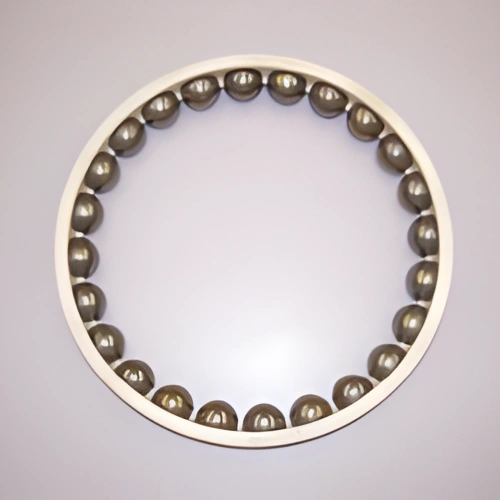
GE LM2500 Bearing System Technical Reference
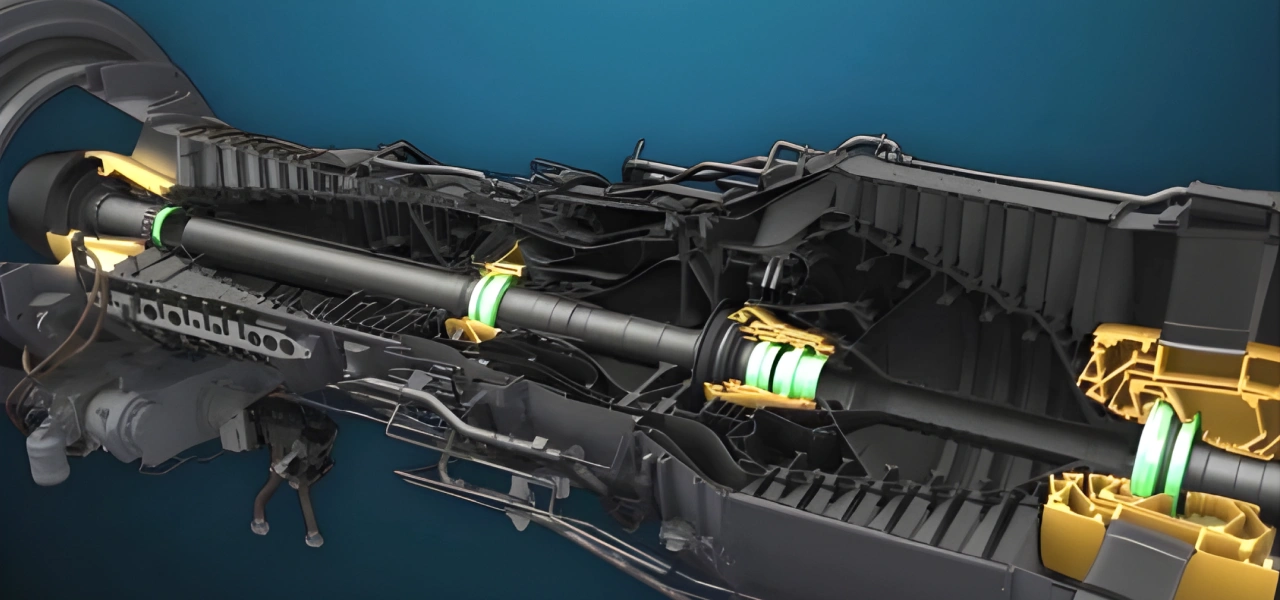
Bearing Locations & Operating Roles
| Bearing | Location | Function |
|---|---|---|
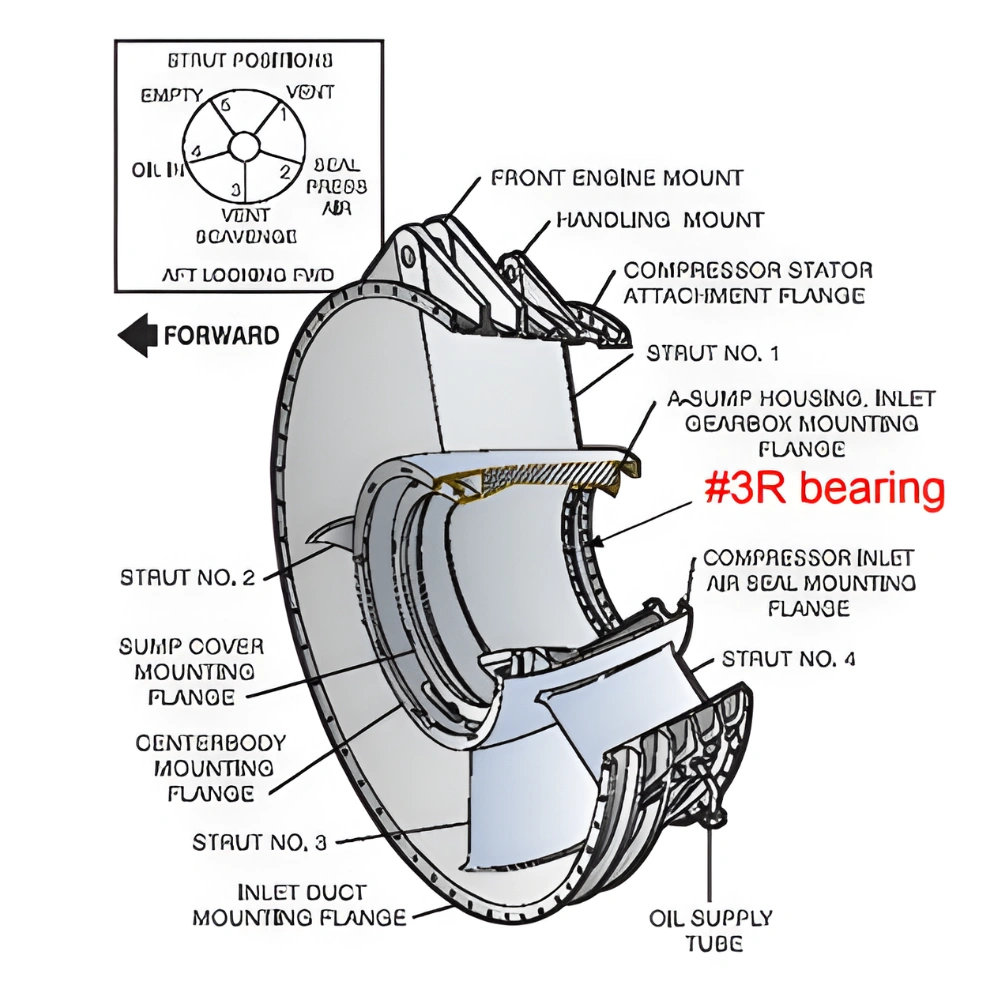
| 3R | Compressor Rear (A-Sump) | Radial support for the rear of the High Pressure Compressor (HPC). |
| 4R / 4B | TBE (B-Sump) |
4R: Radial support for the High Pressure Turbine (HPT). 4B: Thrust bearing for the HPT rotor. |
| 5R / 6R | TBE (B-Sump) | Radial support for the aft end of the HPT rotor. |
| 7B / 7R |
PT Front (D-Sump) PT Rear (D-Sump) |
Radial support for the Power Turbine (PT) rotor inlet. 7B: Main thrust bearing for the PT. 7R: Final radial support at the output shaft. |
Technical Specifications & Operating Conditions
| Feature | Specification |
|---|---|
| Rotational Speed | Ng (GG): ~9,500–10,000 RPM |
| Lubrication | Under-race cooling and side-jet spray (MIL-PRF-23699) |
| Max Temperature | Stabilized oil discharge temp up to 300°F (149°C) |
| Sump Environment | Pressurized by 8 |
Materials & Coatings
Races & Rolling Elements: M50 Tool Steel
Chosen for its high ‘Hot Hardness’ (>58 HRC at operating temps).
Cages (Retainers): Silver-plated AMS 4616 (Silicon Bronze) or High-strength Steel
The silver plating acts as a sacrificial solid lubricant to prevent galling during transient cycles.
Coatings:
| Feature | What to Look For | |
| Black Oxide | Applied to races | Improve oil retention and prevent “standstill” corrosion. |
| Tungsten Carbide | Outer diameter of race (housing intePrfarecvee)nt fretting at the housing interface. |
Part Numbers (Reference Only)
| Bearing | Typical Part Number |
| #3 | 1959M19P01 |
| #4 | 1959M21P01 (Matched Set) |
| #5 | 1959M23P01 |
| #6 | 1959M24P01 |
| #7 | 1959M26P01 |
Failure Modes & Symptoms
Quick Decision Checklist
Before finalizing your choice, run through this:
| Bearing Group | Typical Lifespan | Notes |
| GG Bearings (3R, 4R, 4B, 5R) | 25,000 to 35,000 hours | Higher speeds and temperatures reduce service life. |
| PT Bearings (6R, 7B, 7R) | 50,000+ hours | Lower speeds and cleaner environment extend lifespan. |
This document is for technical reference purposes. Always consult official GE Aviation maintenance
manuals and engineering documentation for operational procedures.